By Archana Yadav
The evening we nearly missed
By the time we left the office, the day had already taken its share from us.
There were messages that still needed answers. Conversations that had not quite finished. The usual weight of work that makes you tell yourself that staying home is the sensible thing to do. Union Chapel was not far, but at that point even a short journey felt like another demand on a day that had already asked plenty.
We went anyway.
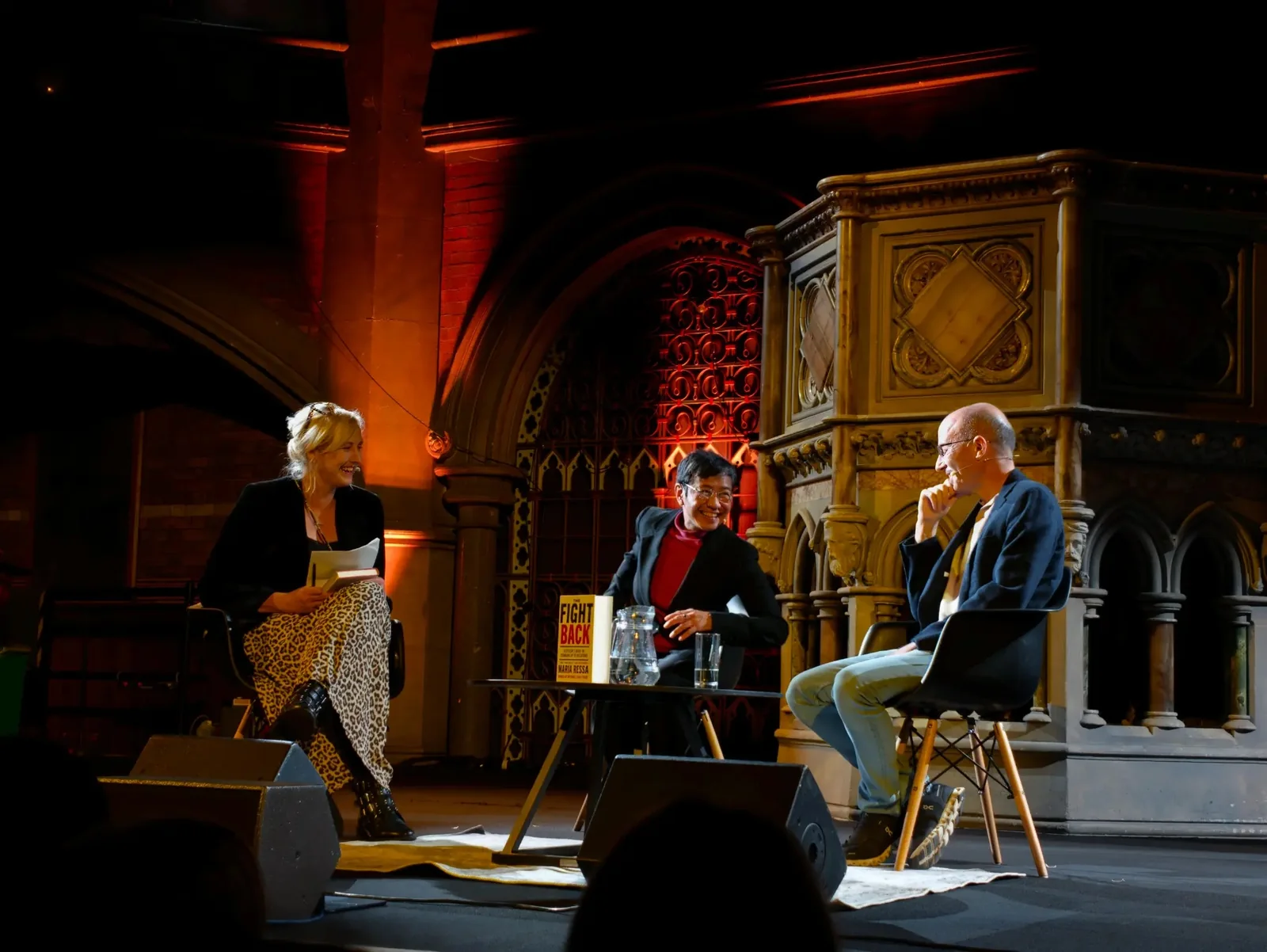
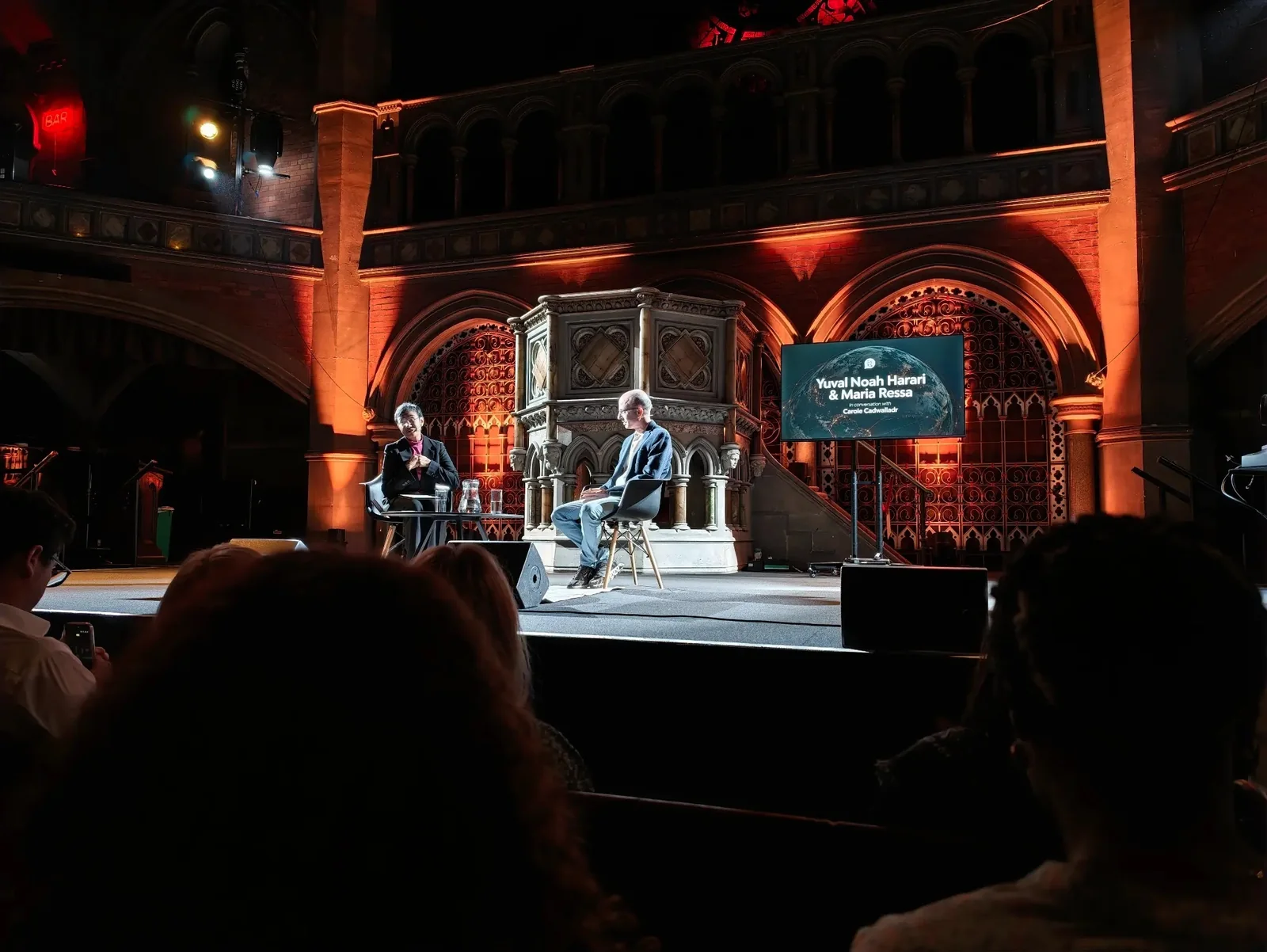
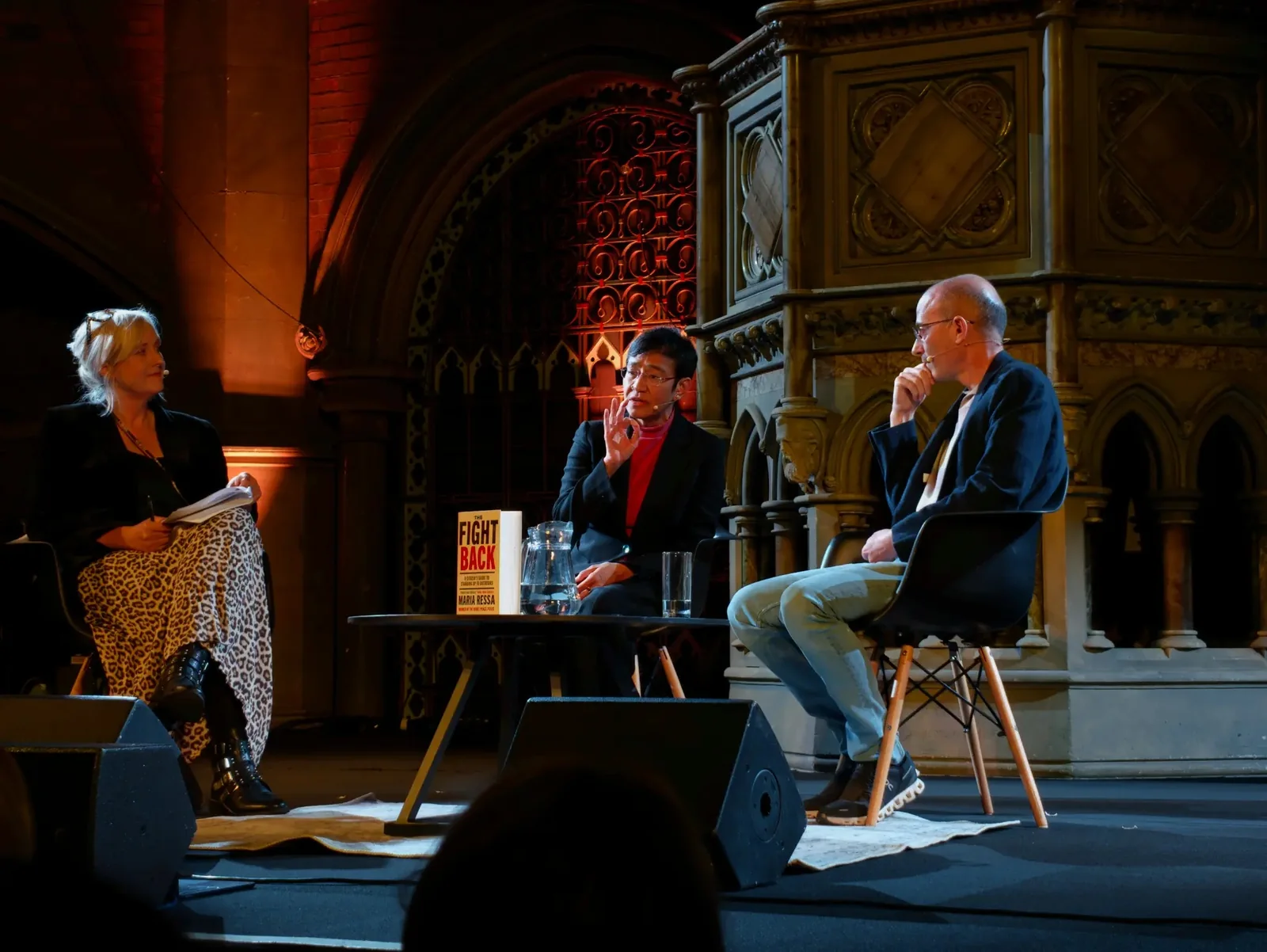
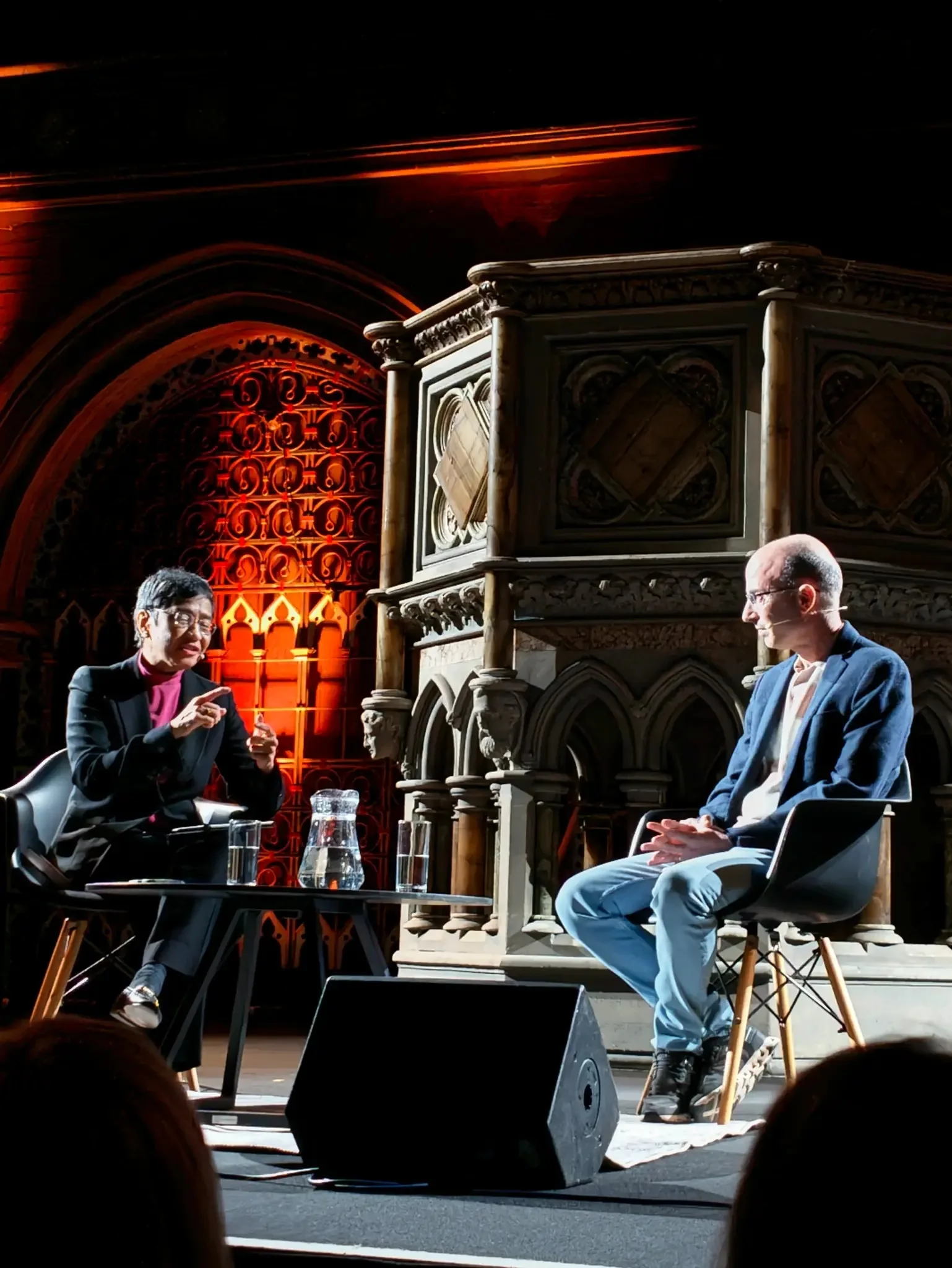
It was one of those decisions that seems small until it is not. We had been looking forward to hearing Yuval Noah Harari and Maria Ressa for weeks. Harari’s work had been part of our conversations for years. Maria Ressa’s courage and the cost at which she has defended the truth brought a different kind of seriousness into the room.
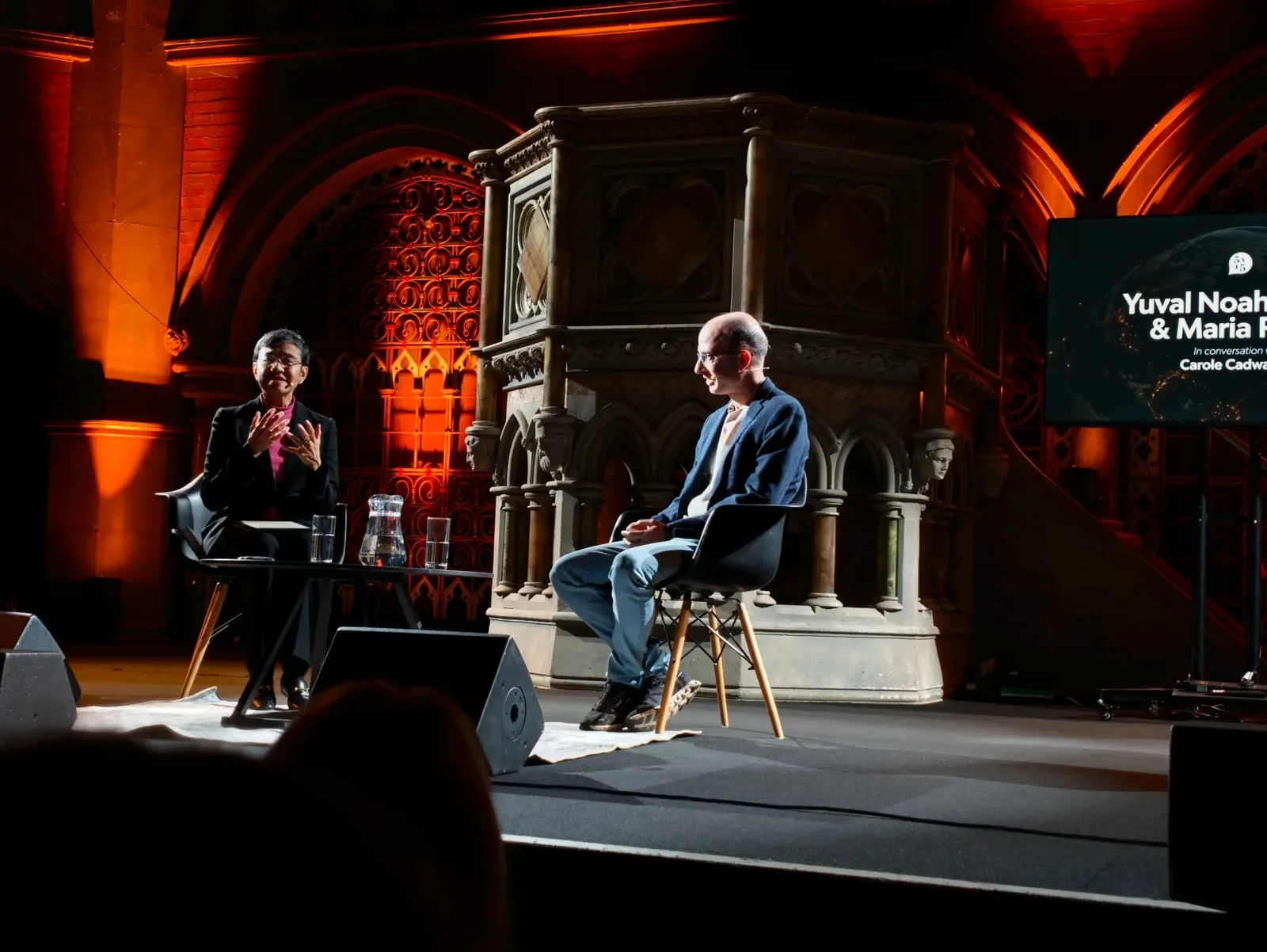
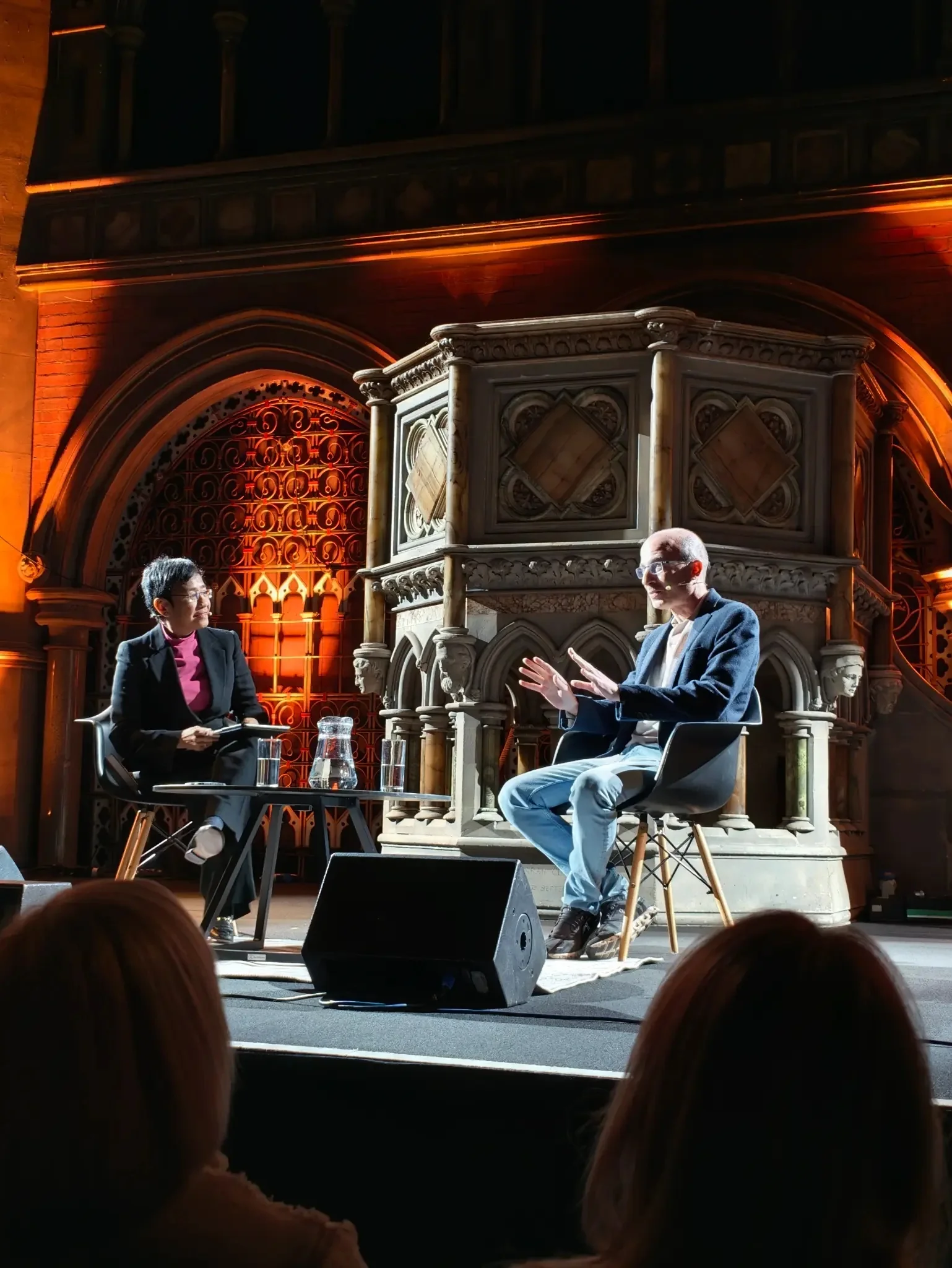
The chapel was full. The stage was simple. There was no need for theatricality. What held the room was the sense that these were not people speaking about the future from a safe distance. They have both spent their lives trying to understand what information does to human beings when it becomes power.
I did not leave with a list of lessons. I left with a feeling that was harder to shake. It was the kind of feeling that comes when an idea stops being intellectual and starts touching something closer to home.
We have more information than ever. I am not sure we have learned how to live with it.
That is the question I carried home.
When an answer arrives too quickly
AI has made an extraordinary promise to all of us: less waiting.
We can ask a question and receive a coherent answer before we have had time to sit with the question ourselves. We can turn pages of material into a summary. We can turn a rough thought into a polished document. We can move faster through work that used to take hours or days.
There is real value in that. I do not want to romanticise inefficiency or pretend that every old way of working was wiser simply because it was slower.
But speed changes our relationship with doubt.
When an answer arrives quickly, it is easy to mistake fluency for understanding. It is easy to feel that a difficult issue has been dealt with because it has been expressed clearly. It is easy to take comfort in a dashboard, a score, a recommendation or a perfectly structured argument.
The danger is not that AI will always be wrong. The deeper danger is that it can be persuasive before we have worked out whether we have asked the right question.
AI can produce a plausible answer faster than a group can discover that it has asked the wrong question.
That is not a criticism of the technology. It is a reminder of the work that remains ours.
In organisations, we are surrounded by pressure to become more efficient. There is always a case to make, a cost to reduce, a process to improve and a decision to accelerate. Yet not every process is a problem worth automating. Not every repeated action is meaningless. Sometimes the apparent inefficiency is where people notice the exception, hear what is not being said or recognise that a rule is about to harm the wrong person.
The question is not whether AI can make an organisation faster. It can. The question is whether it will make an organisation more awake.
The point where somebody has to own it
A system may make a recommendation, but somebody has to live with what happens next.
A candidate is hired, or not. A customer is flagged. A payment is held. A person is offered help, denied help or moved into a process they do not understand. The language may say that “the system decided”, but that phrase is too convenient. Systems do not carry the consequence. People do.
I have started to think of this point as the execution boundary: the moment an AI recommendation becomes an outcome in somebody else’s life.
That is the point at which an organisation has to become very clear about itself. Who owns the outcome? Who can question it? Who has the confidence to override it? Where does a person go if they have been treated unfairly by something they cannot see?
This is where AI governance becomes real. Not in the language of a policy, and not in a committee formed once the work has already moved too far. It becomes real in the small, practical decisions that determine whether somebody is still present when the technology acts.
I do not believe human oversight should mean placing one exhausted person at the end of a workflow and calling it responsible. It means giving people genuine authority, clear information and a route to intervene before a mistake becomes a consequence.
What we must refuse to hand away
The part of the evening that has stayed with me most is not fear about AI. It is the thought that we may slowly train ourselves out of the things we most need.
We are already being encouraged to learn and relearn at a relentless pace. New models. New tools. New systems. New ways of working. That learning matters. But there is a difference between learning how to use a tool and allowing the tool to define what matters.
We should not become so consumed by the race to adapt that we lose the ability to be present.
The physical world still matters. Being in the room matters. Seeing a person hesitate before they agree matters. Listening to a colleague explain a problem badly, then trying to understand the thing they are struggling to say, matters. Trust is not built through perfect information. It is built when people feel seen, heard and able to speak without being punished for complicating the story.
This is why I find the conversation about AI incomplete when it becomes only a conversation about capability. The greater question is what kind of human habits we are rewarding.
Are we becoming more patient with complexity, or less? More willing to challenge a convenient answer, or more dependent on it? More able to build relationships across difference, or more comfortable inside systems that tell us what we already want to hear?
The risk is not that AI becomes too human. The risk is that we become less human around it.
What I carried home
I came home from Union Chapel less interested in the usual question: How quickly can we adopt AI?
The more important question is quieter and harder:
Will this leave us more capable of being human together?
Will it help us make better decisions, or merely faster ones? Will it bring us closer to the people affected by those decisions, or place another layer between us and them? Will it make leaders more accountable, or give them another place to hide?
I do not think the answer lies in resisting technology. It lies in refusing to confuse technological capability with human progress.
We will build more capable systems. That is certain. The question is whether we will build more mature institutions around them, and whether we will still know how to meet each other without turning every judgement into a calculation.
That is what I carried home from Union Chapel.
Not fear of AI.
A greater responsibility for the humans holding it.